
Arctic ocean passes 'irreversible' chemical tipping point
Dehradun ( Vivek Ojha) : A new study spanning two decades reveals that the loss of sea ice has triggered an irreversible chemical shift in the Arctic Ocean. By exposing shallow coastal waters to intense sunlight, the…
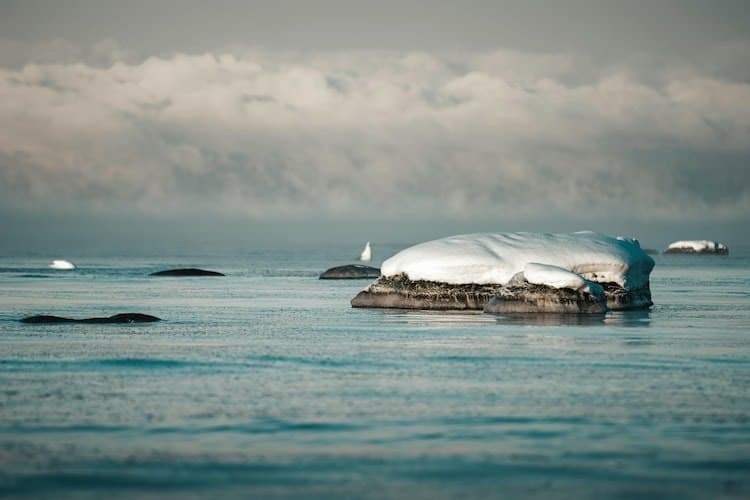
Dehradun ( Vivek Ojha) : A new study spanning two decades reveals that the loss of sea ice has triggered an irreversible chemical shift in the Arctic Ocean. By exposing shallow coastal waters to intense sunlight, the melting ice has accelerated a process that destroys nitrate, the foundational fertiliser required for marine life to survive. The culprit behind the shifting ecosystem is the loss of sea ice, which has been shrinking steadily for decades as global temperatures rise.
An international team led by researchers at the University of Edinburgh analysed 20 years of oceanographic data collected from the Fram Strait – a marine bottleneck where Arctic waters drain into the North Atlantic.

Professor Raja Ganeshram, of the University of Edinburgh’s School of GeoSciences, who has led the study over the last two decades, said, “The changes we report suggest that the Arctic Ocean ecosystem passed a tipping point around 2009. How this change cascades through the food chain needs to be closely monitored as this has profound implications for us, including on commercial fishing in the North Atlantic Ocean.”

The study, published in Communications Earth & Environment, suggests the Arctic passed a critical ecological tipping point in 2009. The resulting nutrient famine is already affecting the whole Arctic food chain, threatening everything from microscopic plankton to commercial fish stocks, seabirds, and marine mammals.
They found the extensive loss of sea ice has drastically ramped up a process known as benthic denitrification on the shallow continental shelves that underlie nearly half of the Arctic Ocean. When ice disappears, increased sunlight triggers temporary algae blooms.

As this organic matter dies and sinks to the shallow seafloor, it depletes oxygen in the sediment. In these oxygen-poor environments, marine microbes consume nitrate and convert it into inert nitrogen gas, removing it from the marine ecosystem entirely.
This shift to nitrate-limited conditions suggests the Arctic Ocean may only be able to support smaller, less nutritious species of plankton in the future, starving the upper tiers of the food chain.
Facebook Comments
Log in to Facebook to comment
Comments are disabled. Contact the administrator.
Related Stories
Turkish authorities detain at least 150 at protest over LGBTQ+ arrests
New Delhi ( The Indian View team) : Turkish authorities detained at least 150 people on Tuesday after police intervened at a gathering outside Istanbul’s Caglayan courthouse, where demonstrators had planned to protest…
Ueda’s brace helps Japan knock Tunisia out of World Cup 2026
Dehradun ( Om Prakash Simalti) : Japan marked the 1,000th game in the history of the World Cup with a 4-0 thrashing of Tunisia on Saturday, to close in on a place in the last 32. Ayase Ueda scored twice while Daichi…
FSSAI issues notices to 14 food companies over misleading ‘healthy,' ‘organic’ claims
New Delhi ( Raghwendra Pratap Singh) : The Food Safety and Standards Authority of India (FSSAI) on Sunday issued notices to 14 food business operators (FBOs) for allegedly using misleading brand names, trade names and…
Tripura secures three National Panchayat awards for grassroots governance
New Delhi ( Raghwendra Pratap Singh) : In a major recognition of Tripura's strengthening grassroots governance framework, the state has secured three prestigious National Panchayat awards, marking a significant…