
Scientists just found a lost river world buried beneath Antarctica’s ice for 34 million years
Dehradun ( Vivek Ojha) : Using ice-penetrating radar gathered across multiple airborne survey campaigns, an international team led by Durham University has mapped a vast ancient landscape stretching along 3,500…
Dehradun ( Vivek Ojha) : Using ice-penetrating radar gathered across multiple airborne survey campaigns, an international team led by Durham University has mapped a vast ancient landscape stretching along 3,500 kilometres of the East Antarctic margin, a terrain of 31 separate flat surfaces, formed by rivers that once flowed freely across what is now the most remote and ice-covered continent on Earth.
Beneath nearly two kilometres of the East Antarctic Ice Sheet, locked away since the continent froze over at least 34 million years ago, scientists have found something that changes the way researchers understand both Antarctica's distant past and its near-term future.
The study, published in Nature Geoscience, is the first to identify these surfaces at this scale, and what the researchers found is not simply a record of a warmer, wetter Antarctica. These buried plains appear to be actively influencing how the ice above them moves today, slowing the flow of glaciers in ways that current climate models have not accounted for, and complicating projections of how much sea level will rise as the world continues to warm.
About Antarctica:
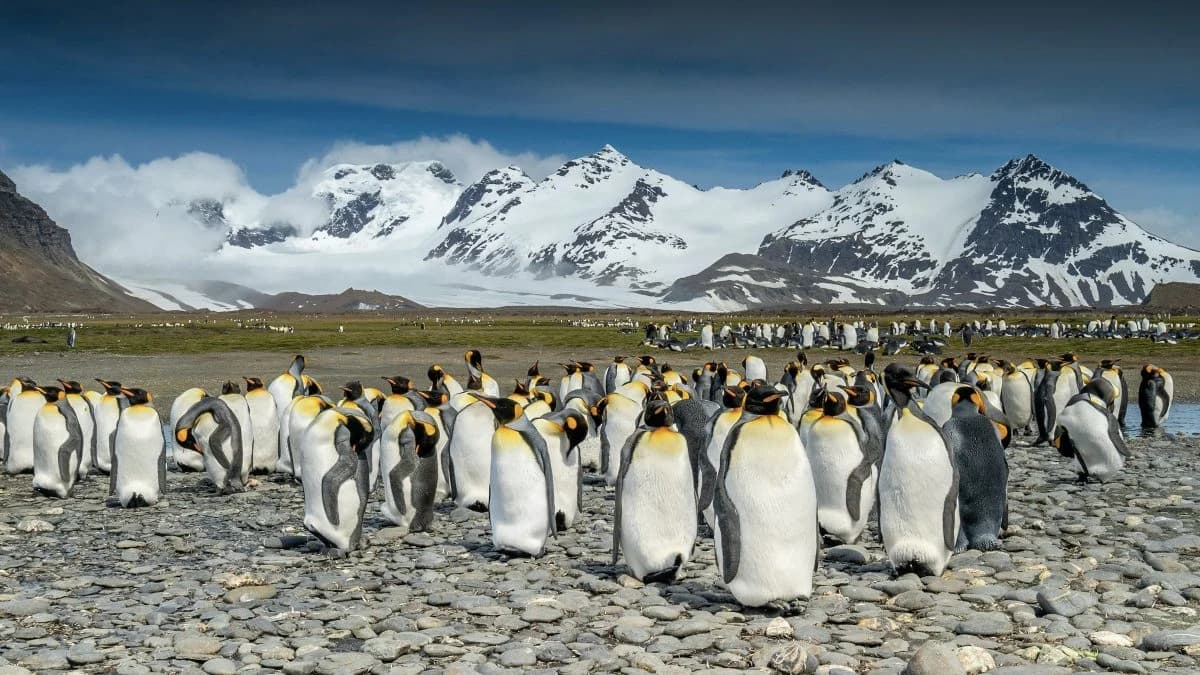
Antarctica “the white continent” is the fifth largest continent in the world with its unique wildlife, extreme coldness, dryness, windiness and unexplored territories. The word Antarctica is derived from the Greek word antarktike, which means “opposite to north” i.e., opposite to the Arctic.

It is situated within the Antarctic Circle and is surrounded by Southern Ocean. James cook discovered Antarctica when he was crossing the Antarctic Circle. The world’s largest ocean current, the Antarctic circumpolar current circumvents the Antarctic continent. Of the 14 million-sq.km area, 98% is covered with thick ice sheets that formed 25 million years ago and holds 75% of the earth’s fresh water.
Facebook Comments
Log in to Facebook to comment
Comments are disabled. Contact the administrator.
Related Stories
Tamil Nadu emerges as major drought hotspot in India: Climate study
Chennai ( The Indian View Team) : Tamil Nadu has emerged as one of the pronounced drought hotspots as the South Peninsular India (SPI), among the four major climatic regions in the country, recorded the strongest…
Assam launches cooling plan to tackle rising temperatures, power demand by 2040
Guwahati ( Vivek Ojha) : Assam has launched its Cooling Action Plan (ACAP), making it one of the first states in India to develop an integrated state-level framework covering four priority sectors - buildings, cold…
UN Climate Week opens in Azerbaijan to delibrates upon climate actions ahead of COP31
New Delhi (Vivek Ojha) : The fourth United Nations Climate Week has opened in Azerbaijan’s capital, Baku today, weeks before COP31. Governments, Financial Institutions, Businesses and Climate Experts have come together…
Scientists discovered an underwater city of 60-million fish nests beneath Antarctica's ice shelf
New Delhi ( The Indian View team) : Hidden beneath hundreds of metres of Antarctic ice lies one of the planet's most extraordinary wildlife spectacles. After drilling through the Filchner Ice Shelf, scientists deployed…